Free 2 Day Shipping With Amazon Prime

Showing posts with label Music. Show all posts

Monday, February 18, 2019

Magic of Music


Magic of Music

I can’t count how many times I’ve heard people of my generation compare modern music to the music treasures of our times. That the comparison is not favorable to present time music.

I’ve always believed that the arts and especially music, is in the eye of the beholder (in this instance ears of the beholder).  I further believe that there is a difference between love of music and appreciation.  I have the music I love but because of my exposure to the music industry, I have an appreciation for all music up to and including the Australian Didgeridoo, and the Sitar.

Many of us appreciate the Oldies of our time for the musical style, others for the lyrics.  I on the other hand, enjoy the lyrics and style, but because I lived the time when the music was being released , more than anything else I remember what I was doing or in whose company I was when I listened to a particular song, for instance I refer you to the time I first heard the Beatles: http://www.being50.com/2013/02/first-time-i-heard-beatles.html


I also enjoyed many of the original performers at concerts when the new music was being promoted:  The last of the Oldies group that I took my children to see at a concert was the Monkees (80 something).  One of my sons looked over my shoulder as I am writing this post and we started a conversation about how he remembers a helicopter landing some 20 yards away from an open field stage and how the crowd went wild. 

I’m grateful to see that my recollections are supported by other family members.  Another instance of music triggering fond memories. My wife and I went on a double date with my sister and her husband to see the Ventures perform at the Capitol Theater in Yakima WA. Also, in the early 80’s.  After the concert we went to dinner and ran into the band members eating dinner at the same restaurant.  Of course, we took the opportunity to greet them and take pictures with them.

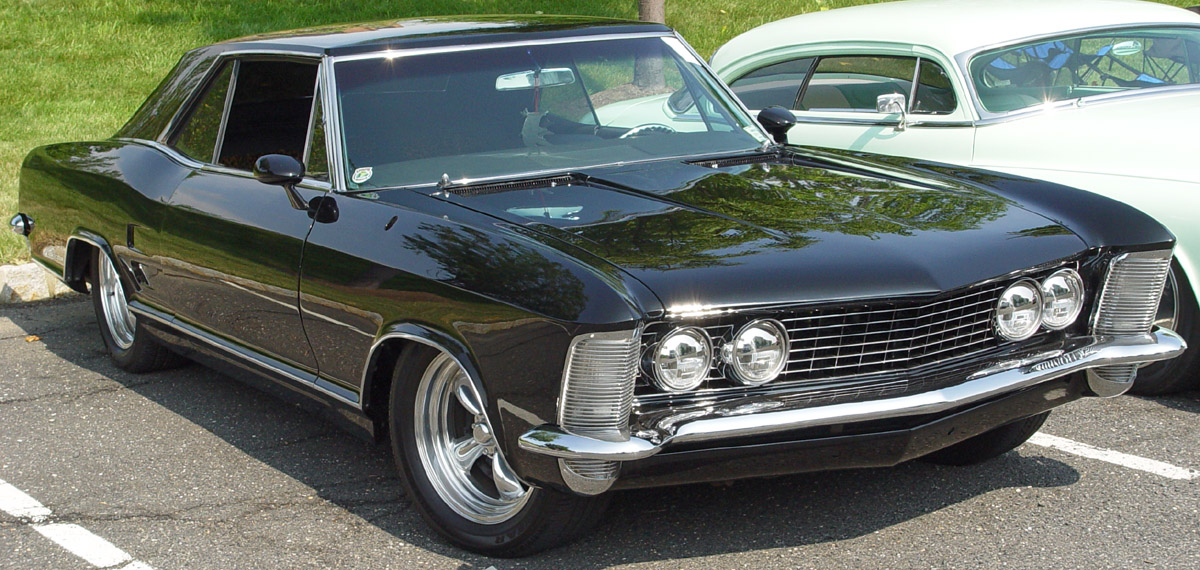
I remember the time I purchased a brand-new Plymouth Fury Sport from the showroom floor, and the first song I heard on the beautiful stereo system was The Beat Goes On, by Sonny and Cher.  I’m telling you, every song comes wrapped in wonderful memories!!  Spend some time thinking about the memories that the oldies bring to your heart and mind.  The best is yet to come…….

Monday, December 12, 2016

Disappearing Acts

Disappearing Acts
Once upon a time not that long ago there was the wonderful developing technology where you could throw your voice to anywhere in the world (the telephone).  Not every household in the USA had one because of cost or even accessibility.  Telephones were connected by wires that had to stretch over “telephone/electrical” poles all over the land.  If you lived out in the country, you would be required to pay a high cost (somewhere in the thousands depending on distance) to run the lines to your property from the nearest phone pole.

For the multitudes that couldn’t afford a telephone at home, there came the payphone.  So interwoven was the payphone booth into our society that even Superman used the phone booth in the storyline every time that he had to change from Clark Kent to Superman.

About the same time the television technology was emerging (black and white at first).  Horrible reception in the beginning, more snow than content.  Transmission capability (towers) were limited at first and most prevalent in areas of dense population (cities) where you could reach the most people with the least number of transmitting towers.  Initially there was only 3 major television networks competing for viewership.  Programing was also minimal for the number of hours of broadcast.

While there was progress being made on all fronts of technology, new emerging technologies were coming to the forefront.  Imagine being able to send documents across the country within minutes to complete transactions that required your signature.  The fax and fax machine slowly worked into every one’s life and eventually would become indispensable.  At the start of this phenomenon you would go to a central location to send and receive faxes.  Eventually the more affluent (businesses to be sure) would acquire their own fax transmitting machines.

Audio recording media has gone from vinyl to 4, and 8 track cartridges, cassettes, CD’s. and now digital with the leap to the latest (streaming).  Video rentals have pretty much disappeared because you can now rent DVD’s out of a red box or better yet stream from Netflix, Hulu, Amazon Video or iTunes.


But wait! There’s more; the latest rumor is that televisions sets will be the next to disappear from your retail shopping.  The best way to catch your favorite movies at present and on the run is iPad, Tablet, your PC or your cellphone.  It wasn’t that long ago that everyone was striving to outdo the Joneses to the largest television screen possible.  I presently have a Home Theater projector for up to 100 inches and more.  The best is yet to come……….

Thursday, July 9, 2015

Overdoing A Good Thing

Overdoing A Good Thing

The type of scorching temperatures that we are experiencing in June this year, remind me of a time years ago.  I was like a teenager (actually in my early 20’s then) I could play in the sun all day, party until 2 am and go to work by 6:30 the next morning.  I’ve never overdid the alcohol, so don’t imagine a guy showing up to work reeking of alcohol, and still stumbling.  My body and mind could handle the punishment that I was subjecting it to.

At the early stages of life most of us feel invincible and rightfully so, youth is a combination of many things, inexperience and vanity are only two of those many things.  By the age of 30 I felt that even retirement age was light years away, and I could take chances with my health, and finances.  What a difference five years and a good new friend can make.
My friend was 35 years older than me, and retired with 3 pensions.

What made me follow his advice was his level of achievement and success.  As a family man and father, he admitted to being a failure (married five times and divorced four).  He confessed that the only thing that kept him out of jail was that his mother would pay the child support money every month in his name.  He convinced me to concentrate my efforts on earning a steady and guaranteed pension (one that was difficult to borrow against). 
My attitude at the time was that there would be plenty of time to save for retirement in later years.  What I didn’t realize back then was that the money you saved in the early years would be good enough to buy a good used car in the future years.  Back in the 70’s who would have guessed that a used car by retirement would cost as much as 25 to 30 thousand and more.  For that matter who would have guessed that a mid-70’s Chevrolet would cost 60 thousand in 2015 (price of 2015 Impala SS).  The solution would be to start a retirement plan and keep adding to it year after year without regard to the slow but sure and compounded progress.

Up until now I had taken risks that delivered immediate gratification by way of monetary compensation.  During the early years of college I had developed a skill (trained radio announcer voice for Spanish Radio Broadcasting, and recording voiceover commercial work).  The work was so specialized that I had to join the AFTRA (American Federation of Television and Radio Artists) Union.  My voiceover commercials were being played in some U.S. Markets (Los Angeles, Florida, Texas, etc.) Mexico, Central America, and South America.  The money was totally out of this world for this small town farm boy, but the benefits and guarantees were not doing anything for my retirement age.


I was fortunate enough and mature enough to understand that I had to give up all those things that I enjoyed doing and take on the challenge of preparing for a time that most of us refuse to see as reality (retirement age).  I know of at least two friends who thought they could survive and thrive doing the things that they loved doing (radio and television work) and today they are looking forward to a retirement on social security.  Don’t get me wrong, many things that we grow to love doing, actually lead to a great retirement life.  The field (career) that I pursued became my very happy and loved choice (architecture and project management).  My second and final choice for a career didn’t have the ego building aspect that broadcasting comes with.  That’s where humility comes in.


This post kind of reminds me of the song The Gambler, by Kenny Rogers:  “You’ve got to know when to hold’em, know when to fold’em, know when to walk away, know when to run.”  I am forever grateful to the man up above and a good friend that showed me the way.  This very moment is an example of getting the strategy right: Do what you have to do, so that eventually you can be free, to do what you like to do.  The best is yet to come……

Wednesday, July 8, 2015

Then and Now

1963 Buick Riviera
Whenever you make comparisons you have to select at least two items or subjects for the sake of comparison.  The two eras I have selected are 2015 (present time), and I selected 1960 randomly for no particular reason other than a point of reference.  While I realize that some of my readers may be too young to have fully experienced life in 1960.  I would hope that all of us may have parents that lived in that era.  I realize how difficult it is to imagine your father or mother wearing bell bottom pants, and perhaps even psychedelic print shirts and blouses but history can’t be denied.
Despite all the technological and medical advance in place and being made every day, I don’t envy or desire to be a young adult today.  The challenges facing young people today are many and extreme.  On a very basic level, I can’t imagine losing a loved one because of driving and texting.  Back in 1960 if you had a very important idea or message to share with someone, you would scan the streets for a payphone.  After finding a payphone, you needed a dime to make a local call. 
In 2005 I traveled to Los Angeles to visit family, and discovered that I had left my cellular telephone in my car at the airport in Seattle.  When I went to call my home from a payphone at the airport (in LA) the cost for 3 minutes was $6.  My wife being the brainy person that she is instructed me to purchase a prepaid calling card that I could use from any phone.  Since then almost 100% of payphones have disappeared.
Imagine the silliness of a prediction (forecast) that was circulating back in 1960 that we (humans) would evolve to having only one thumb and the index finger (ET style) because everything would be push button in the near future.
Back in 1960 a person could leave their house and go into town with ten dollars in their pocket, and would be more than enough to have a good time on the town.  At the time $10 was approximately 10% of the average monthly income.  Based on 2015 median income you would have to take almost $500 (10% of monthly income) for a comparable night on the town.  I realize that due to the disparity in incomes half the people make less and half the people make more.
I tried to find a similar chart for cost of living in 2015. And first question to come up is for what date.  In other words our economy is so volatile that a gallon of gasoline can vary by as much a couple of dollars depending on what month of the year or what part of the country you are researching.  You can’t set a grocery budget for the entire year because all grocery related prices are subject to change, and almost always up.  As an example, a case of mad-cow disease in England will spike the prices of meat overnight in the U.S. (one of the many benefits of the Internet and social media).  A maintenance shutdown of an oil refinery spikes gasoline prices due to artificially created shortage.
I believe that those of us in my age group have the best of then and now.  Not only did we survive the British music invasion, and lived the best era of music, but can now enjoy it digitally like it was being performed live.  I can also attest to personally having the best of the muscle car era, without the classic cost related to owning one now.  I have all of my music collection and family photos in one portable hard drive (I keep a backup for safety sake) plus the iCloud.


Make the most of what you have.  The best is yet to come………..

Tuesday, March 25, 2014

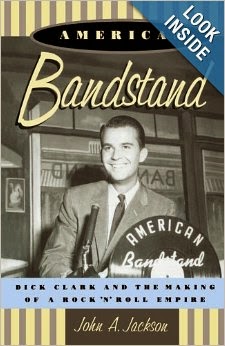
American Bandstand to Radio 2

American Bandstand to Radio 2

Imagine having your favorite television series like you do today except that it would only be on radio.  Imagine American Idol, Scandal, Dancing with the Stars, The Blacklist, and CSI, only on radio and without the visuals.

Here are some of the popular radio play presentations on radio during the infancy years of television: 

·       Dragnet (1949 - 1957): Dragnet enjoyed an unprecedented popularity among ordinary citizens and law enforcement personnel alike. The show was lauded for its positive portrayal of police officers, so much so that upon the death of Jack Webb, Sergeant Joe Friday’s badge number 714 was retired. 

·       Minus One (1955-1958) Initially a revival of NBC’s short-lived Dimension X (1950-1951), X Minus One is a sci-fi lover’s dream and is ranked among the finest science fiction dramas ever produced for radio.

·       Tales of the Texas Rangers (1950 - 1952) Tales of the Texas Rangers aired from July 8, 1950 to September 14, 1952. As were most of the Westerns made in the 1940s and 1950s, Tales of the Texas Rangers was idealistically patriotic, focusing on upholding American laws and values. However, unlike most Westerns of the day, the show had a contemporary setting, and based its realism in the procedures of the modern Texas Rangers.

·       The 1940s had many more popular programs: the Shadow, and a handful of variety shows.

American Bandstand for those of us growing up in the time of our youth was the equivalent to MTV. I can actually say that sometimes after a while of listening to a hit song in the 60’s, I was surprised when I finally got to see the singer or group on Bandstand.


·       It premiered locally in late September 1952 as Bandstand on Philadelphia television station WFIL-TV Channel 6 (now WPVI-TV), as a replacement for a weekday movie that had shown predominantly British movies. Hosted by Bob Horn as a television adjunct to his radio show of the same name on WFIL radio, Bandstand mainly featured short musical films produced by Snader Telescriptions and Official Films, with occasional studio guests. This incarnation was an early predecessor of sorts of the music video shows that became popular in the 1980s, featuring films that are themselves the ancestors of music videos.
·       Horn, however, was disenchanted with the program, so he wanted to have the show changed to a dance program, with teenagers dancing along on camera as the records played, based on an idea that came from a radio show on WPEN, The 950 Club, hosted by Joe Grady and Ed Hurst. This more-familiar version of Bandstand debuted on October 7, 1952 in "Studio 'B'," which was located in their just-completed addition to the original 1947 building in West Philadelphia (4548 Market Street), and was hosted by Horn, with Lee Stewart as co-host until 1955. Stewart was the owner of a TV/Radio business in Philadelphia and even though he was an older gentleman, his advertising account was a large one for WFIL-TV at the time and was put on the program to appease the account. As WFIL grew financially and the account became less important, Stewart wasn't needed and was eventually dropped from the program. Tony Mammarella was the original producer with Ed Yates as director. The short Snader and Official music films continued in the short term, mainly to fill gaps as they changed dancers during the show—a necessity, as the studio could not fit more than 200 teenagers.
  • On July 9, 1956, Horn was fired after a drunk-driving arrest, as WFIL and dual owner Walter Annenberg's The Philadelphia Inquirer at the time were doing a series on drunken driving. He was also involved in a prostitution ring and brought up on morals charges. Horn was temporarily replaced by producer Tony Mammarella before the job went to Dick Clark permanently. ~ From Wikipedia
In late spring of 1957, the ABC television network asked their affiliates for programming suggestions to fill their 3:30 p.m. (ET) time slot (WFIL had been pre-empting the ABC programming with Bandstand). Clark decided to pitch the show to ABC president Thomas W. Moore, and after some badgering the show was picked up nationally, becoming American Bandstand on August 5, 1957.  The rest is very successful history.  The best is yet to come…..

Sunday, March 9, 2014

Right Place Wrong Time

Digital Technology
Speaking in Poker Terms, at some point in time we have to get comfortable with the hand that we have been dealt.  In this instance I am referring to the many advances in digital technology that keeps progressing by leaps and bounds especially in the area of audio and video.  I still remember the time when we had no choice but to listen to the car radio at whatever reception we could get and be happy with it.
Can you imagine life without recorded music? Probably not.  By the time I got to where I had a real interest in music and the recorded medium, the 45 rpm vinyl records were in.  I still got to play the 33 1/3 rpm, and 78 rpm vinyl records, but not with my father’s permission.  I used to own and operate 3 music stores in Washington State in the early to mid-70’s, a very inconvenient time for music store owners.
 
Some very popular music would hit the charts, and I would have to maintain inventory in 45 rpm, and long play vinyl, 8 track, and cassette.  All product would eventually sell but it seems that customers were always asking for the one medium that had just sold out. I swear I had the supplier on speed dial, I was constantly placing special orders.
The arrival of the 8-track and Cassettes were a special joy, because now you could take your music along for a road trip.  No more being stuck with radio stations that you kept losing the frequency to.  You could take them to the beach, and you didn’t have to be overly careful with it, and that is why you didn’t always carry them in organizers.
The arrival of the CD was supposed to be the “Perfect Sound Forever,” wrong on two counts: early CDs sounded horrible (though noise free, an audio first); and if you didn't handle them reasonably well, they would (and still do) degrade. Many first generation CDs degraded all by themselves. They were more than difficult to play in any moving environment: portables and car players were for a long time expensive and less than successful, unlike the 8-tracks and cassettes they were replacing. The price of the CD’s when they first came out were cost prohibitive, and not all artists were releasing music on the CD at first.  An interesting note: there are no continued releases of recordings for 8-tracks or cassettes, but the LP has never gone out of production, with many new releases for the increasingly small audiophile market and lunatic fringe.
Between 1990's and today CDs reached their maximum saturation and became the easy to use medium they are known as today, they began to look clunky compared to the MP3 players.  Further progress has now brought the “Cloud” into play where I can access my music collection from anywhere with the use of a Smart Phone, computer or the magic of Blue Tooth technology.
So once again we need to accept the hand that we have been dealt, and enjoy the technology that we have all around us while we are here.  With the advent of “Google Glass,” and wrist watch computers, sooner or later we are going to miss out on the future of digital technology.  I must say that I am glad I won’t be here for the Blue Tooth Technology being imbedded into our heads and using the eardrum for a speaker (for internal use of course).  The best is yet to come….

Monday, February 24, 2014

A year In the Life 2

A year In the Life 2
Perhaps it’s just that I try to see the good in everything.  There have been so many points (years) in my life where I can see, especially in looking back, where my life seemed to switch directions or shift into overdrive.  I suppose that if I really tried hard and devoted enough time into it, I could rate each one of those years into some sort of level of importance.  Yet each one of the years that I can highlight were stacked upon each other: that’s to say that progression was possible because of each year’s events.
As an example of sequential occurrences (progression):  my parents made the decision to move to the United States, after that transition everything that happened in my life happened in the U.S., because of the time spent at the border town waiting for permanent residency in the U.S., my parents separated and eventually divorced, after a couple of years of struggle, my mother met and married my step-father, etc., etc..
The significance of 1959 in my life is paramount to not just my life but the life of everyone that crossed (or is otherwise became involved in) my life’s path to this very day.  It was this year that my step-father was offered a job in the Pacific Northwest (while living in Texas).  We arrived in Washington State and our new home (life) just prior to Labor Day of that year. 
While almost everything that my life evolved into is rooted in the northwest, including the people that have played significant parts in my development, my past is undeniable in importance.  I realize how intricate my trend of thought is, and I agree that you almost have to read what I am writing at least twice to be able to follow along.  Even I find myself going back and reading my own material to make sure that in the end it makes sense.  Consider that I was born in Mexico to parents of means, moved to a border town to (legally immigrate to the United States, arrived in California, soon after my parent’s separation, moved to Texas and in 1959 to Washington State.  The trajectory of migration is not anything that could have been foreseen or even planned.  The word destiny comes to mind.
I believe that we are all destined to live out a life that is planned for us, but we affect it to some degree by the decision that we make at certain crossroads.  I apologize if this post seems to be deeper than most, but for some reason I was compelled to wake out of a deep sleep to write this material at 2:30 in the morning. To make this post more interesting I will share with you other events of importance that happened in 1959:
Some songs released; Platters, “Smoke Gets In Your Eyes”; Lloyd Price, “Sugar Lee”; Frankie Avalon, “Venus”; Fleetwoods, “Come Softly To Me”; Wilbert Harrison, “Kansas City”; Bobby Darin, “Mack The Knife”. 
 
On February 3rd: Buddy Holly, Richie Valens, and J.P Richardson are killed in a plane crash near Clear Lake, Iowa.  They are the first rock stars to die.
In my life, I have left a wake of many happy people for having crossed my path along the way, and at least a couple miserable ones that I am aware of.  The best is yet to come……

Sunday, February 9, 2014

Early Influence (50th Anniversary)

Early Influence (50th Anniversary)
Is it possible this was the first exposure to what would later become known as global community influence?  Up until now everything about our music culture was pretty much home grown, hillbilly, bluegrass, Rock-A-Billy, country, folk jazz, you name it, pretty much all had its roots here in America.
Up until now most recording artists were getting one or two hits on the charts per year, and all of a sudden with the arrival of the Beatles, you could turn on the radio and listen to two or three even four of their new hits at the same time.  On their first full year of exposure to the USA audience (1964) they had 8 songs in the top 55 songs of the year on the Billboard Chart. 
The eight songs were:
  • # 1. I want to hold your hand
  • # 2. She loves you 
  • # 13. A hard day’s night 
  • # 14. Love me do
  •  # 16. Please, please me 
  • # 40. Twist and Shout
  • # 52. Can’t buy me love 
  • # 55. Do you want to know a secret
During their career they went on to release 13 Albums, more than 200 songs, and they charted 21 # One Singles, and they became the most influential music group ever.
A special factory had to be built in order to keep up with the millions of records being sold by the Beatles.  Soon after their arrival in US Market a radio station in Los Angeles California started playing nothing but Beatles music.
The Beatles led the British Invasion, some of the groups that followed were:  The Dave Clark Five, the Animals, Gerry and the Pacemakers, Herman’s Hermits, the Hollies, Tom Jones and many others.  The best is yet to come…..

Thursday, February 6, 2014

1st Time I Heard the Beatles 2

Ed Sullivan with the Beatles Feb. 9, 1964
February 9th marks the First Anniversary of this blog (www.being50.com) and this post is number 301.  A great big heartfelt thank you for all of you that have made this effort worthwhile.  The Blog enjoys readership from around the world.  The following based on numbers alone is as follows: the top 6 countries are; USA (by far the largest), China, Ukraine, France, Canada, and United Kingdom.  Another handful of countries round up the readership.  The page views are in the 10’s of thousands.  Looking forward to the second year!
 One of my sons originally convinced me to write a book about my life and family, a book which is still in progress.  I shared my book’s rough draft with my son (around a hundred pages), and he suggested that I start a blog.  My son and I share many similar traits, one in particular is decisiveness.  Once we agree on a course of action, we start immediately.  I still have that February 9th a year ago fresh on my mind; I was sitting across from him at his dining table, as he began initiating the blog.  As quickly as he was done (in minutes), he said, write your first blog.  I told him I didn’t know what to say.  He said write about your favorite music group.  That became my first post: The First Time I heard the Beatles, http://www.being50.com/2013/02/first-time-i-heard-beatles.html.  That post was not much more than a sentence or two, and yet it got an unbelievable response. 
 Today I would like to expand a little on that first post.  Hearing about the Beatles for the first time created a little more than your normal exposure to a new song.  Up until that very day all my music heroes were American Made (the following list is the top 7 Hits of 1963); Jimmy Gilmer and The Fireballs - Sugar Shack, Beach Boys - Surfin' U.S.A., Skeeter Davis - The End Of The World, Cascades - Rhythm Of The Rain, Chiffons - He's So Fine, Bobby Vinton - Blue Velvet, Paul and Paula - Hey Paula.
·       Released: 29 November 1963 (UK), 26 December 1963 (US)
·       John Lennon: vocals, rhythm guitar, handclaps
Paul McCartney: vocals, bass guitar, handclaps
George Harrison: lead guitar, handclaps
Ringo Starr: drums, handclaps
·       Released on 29 November 1963, I Want To Hold Your Hand sold more than a million copies on advanced orders alone. It became the group's first US number one, and kick-started the British Invasion of America.
·       The song was written by Lennon and McCartney
The very next year (1964) The Beatles had 8 songs in the Top Hit Songs of the US Music Charts.
It’s been 50 years since 73 million people tuned in to The Ed Sullivan Show to watch the Beatles perform live on American TV for the first time.
 
  • That Feb. 9, 1964 performance helped set Beatlemania in motion, and also resulted in Capitol Records opening up a factory in Jacksonville, Ill. to meet the demands of pressing the millions of Beatles albums that were being sold. That factory was nicknamed “The House the Beatles Built.”
  • How much did the Beatles get paid for their Ed Sullivan performance? The deal called for them to make three appearances in 1964 for $10,000 — which is $75,147 adjusted for inflation in 2013.
  • Their performance was so highly-anticipated that the show’s organizers received more than 50,000 ticket requests for the 700 seats in the theater. And it appeared all 700 present squealed in delight at the sight of the Beatles. By Chad Merda
How appropriate that my Blog’s 1st Anniversary coincides with the Beatles 50 Year Anniversary of their arrival in the US of A, and performance on the Ed Sullivan Show.  The best is yet to come…..

Friday, September 27, 2013

Time of Year (Halloween)

The inside is covered with graffiti, most along the lines of "Lydia Lives."
Every once in a while different thoughts, senses and events come together to form the perfect convergence, creating perhaps more questions than answers.  I just returned from a vacation in Southern California, which reminded me of a song that I grew up with (Hotel California, Eagles).  I never really paid attention to the lyrics, but I did tonight and it surprised me how the message leads you to a dark place. Don Henley of the Eagles was asked about the meaning of the song lyrics during a 60 Minutes Interview back in 2007 his answer was:  It’s basically a song about the dark underbelly of the American Dream, and excess in America which is something we know about.
Hotel California, Eagles
I started to relate a story that I read in a newspaper as a teenager but I got sidetracked when I located the story of Lydia’s Bridge.  Some non-believers, might call it hogwash, others yet may call it Urban Legend.  The important thing is, what do you think?  
 
Lydia's Bridge

On certain rainy nights, where US 70-A twists around a sweeping curve that passes by an old, overgrown underpass, drivers will see a young woman in a white evening dress standing by the side of the road, desperately trying to flag down a passing car. If anyone pulls over to help the young lady, she climbs meekly into the back seat of the car and explains that her name is Lydia, and that she's just been to a dance and now she's trying to get home. She gives the driver an address not too far away, and he kindly agrees to take her there. The driver may try to engage Lydia in conversation, but she seems distracted and in a world of her own, so he just leaves her in a respectful silence and concentrates on the road ahead.
When the car pulls in to the address that the young woman gave, the chivalrous driver invariably hops out to open the door for her — only to discover that she has vanished.
Perplexed, the man goes to the door, where an old woman answers. The man explains that he's picked up a young lady named Lydia by the overpass who asked to be brought to this address, but she's no longer in the car. He wonders if she may have run out before he could open the door, and he just wants to know if she's safe and if everything is as it should be.
A faint, pained smile of recognition passes over the old woman's face, as she reaches for a picture in a silver frame sitting on a table by the door. It's a photograph of the young woman the man drove to the house.
"Lydia was my daughter," the old woman says, "She died in a car wreck by that overpass in 1923. You're not the first one, and I suppose you won't be the last. Every so often, her spirit flags down a passing driver. I suppose she still doesn't understand what happened to her. I suppose she's still trying to get home."
That's why the overgrown underpass near Jamestown is called Lydia's Bridge. Drive past it on a rainy night and you may see Lydia, too.                                                                   ~ Stories from the Piedmont                                                                        
The post I was originally going to write (also about a hitchhiker) will be written shortly, look for it soon.  The best is yet to come…

Tuesday, July 30, 2013

Remember When Songs Told a Story 2

Remember the Times

I don’t know about you, but music was everything to my friends and me.  (See: Remember When Songs Told a Story – posted: July 13, 2013).  One post and even 20 posts on this subject wouldn’t do it justice.  I can’t decide if all of my favorite songs that I grew up with were favorites, because of the music or the lyrics (message).

Music was the center of everything, every day of your life.  If you were sad, it seems that a song would come along on the radio that would remind you of the loved one you just lost, or broke up with.  Likewise, if you were happy almost every song gave you a reason for further celebration.  The popular artists of the time almost always sooner or later would record some religious music (Green Grass of Home-Elvis Presley), so even when the occasion was sad, you could always go to your favorite artist for the right message.
If you had a car that you were proud of and wanted to just drive and enjoy, what better way than to have the radio on full blast (careful not to blow the speakers).  Radio speakers back then were not meant to handle the music love awakening of the Baby Boomers:  I don’t remember being aware that I was a part of the Baby Boomers growing up but I was a part of it, and dang proud of it.
In our youth, we didn’t only listen to the music, we actually sang along with it: We knew the lyrics and didn’t care who saw us singing along. Many years would go by before we started tuning in to the special radio stations that carried our type of music, and even further down the road before our music became known as Oldies. 
I’ve even thought of opening a franchise of diners that catered to the Baby Boomers, selling only pizza, hamburgers, fries, and milk shakes (maybe a salad bar for special diets), and providing a disc jockey to play music from the 50’s and 60’s, on Friday and Saturday nights.  On Sunday night we would offer the same menu of food and music, with the addition of 70’s, and 80’s.  We could stay open from 6 pm for dinner with music starting at 8 pm, and closing by 11 pm, by closing early no one has to be embarrassed that they had to leave early.  Can you imagine dancing to; At the Hop-Danny and the Juniors, Under the Boardwalk-The Drifters, or I’ll Remember (In the Still of the Night) -The Tokens.  The possibilities are enormous.  Let’s not forget that Col. Sanders was 65 when he started the successful franchise known as KFC.  The best is yet to come…