Free 2 Day Shipping With Amazon Prime

Showing posts with label Wealth. Show all posts

Wednesday, November 10, 2021

Secret Sauce


Man's Life Stages

Making the most of life is always important but never as important as when you near your Golden Years.  I refer to this post as Man's Life Stages only because it's being shared by me and obviously a man's perspective.  Having said that, all I share will also apply to a person of the opposite gender.  


Three Measures

For the purpose of this post, I will use three measures on every Stage of Life, and they are: Time, Money, and Energy.

  • First Stage - Youth: Many young men during their high school years and some even into college have plenty of time and energy but minimal money.  
  1. Without a doubt, most often by choice or circumstance.  Their values and priorities have yet to be developed.  I on the other hand had my very first successful business at the age of 10.  Some might say I was lucky, however, Luck is what happens when preparation meets opportunity.  
  2. I'm sure that multitasking has been around for a long time, I can't remember a time when I didn't have at least 3 or 4 things going on at the same time.  I would even go as far as to say that the common problem is lacking motivation, and thus lacking money.
  • Second Stage - Adult: Young adults by now for the most part have completed college or entered the work force, started a business and/or are working their way up the corporate ladder. Some maybe even have gotten married and are raising a family.  All of a sudden they find themselves (hopefully) with plenty of money, and energy (still young) but no time. 
  1. It doesn't have to be as describes but I'll guess that a sampling would show approximately 90% as described.
  2. This stage of life is a time when many relationships get stressed to the breaking point.  If you don't have a strategy and great partner to help you through it, you may run into some tough challenges.  Managing your limited time is crucial.  My wife and I had 4 children, and I was fortunate that she wanted to be a stay at home mom until all the children were attending school full time. In the meantime she was involved in our family business which didn't impose a stringent work schedule on her. 
  • Third Stage - Old: If you worked smart and diligently had some good luck, and kept all the chainsaws you were juggling up in the air, you should find yourself with lots of time, ample money, but low on energy.
  1. Hopefully you made your money for retirement and made some wise investment choices before you ran low on energy.  I've always said that in life I took some risks based on knowing that if I failed I had enough time to recover the losses.
  2. However, at some point in my age progressions I started playing it safe.


And now for the Secret Sauce:  There is one element that can make all the difference in the world at every one of the 3 stages especially the third one.  I'm sure we have all heard someone say, "if only I had known I was going to live this long, I would have taken better care of myself."  We don't all have the blessings of good genes, or healthy habits plus a great life partner who keeps us on the straight and narrow to better life choices.

If you already missed the train to good health in your golden years, then you must share this and other similar articles with your children so they don't end up finding out at a later time in life.  As always, I make the claim that I am healthy, happy and blessed.  I still have enough energy to be working, even if I really don't have to (because I am retired).  I still enjoy long road trips in which I do all the driving by choice.  I have many interests and I stay mobile and involved.  Remember: If you don't get of the couch while you can, you won't be able to get off when you have to.  The best is yet to come.....

Tuesday, February 21, 2017

Surprise At Every Turn

Surprise At Every Turn

Do you remember a time when you felt in control of most aspects of your life?  Perhaps I am unique and no one else ever felt that way.  A possibility but doubtful.  Even if raised in poverty I believe it's human nature to be optimistic.  I wasn't born with a silver spoon in my mouth, but thanks to the love and nurturing of my parents, I had all my needs and many wants.

Special treatment growing up didn't set me up for false expectations, but did encourage me to strive for attainable realistic successes (goal outcomes).
Two key words so far are "optimistic and realistic."

Optimistic
  • someone who is optimistic is hopeful about the future and tends to expect that good things will happen
  • optimistic about: She said that she was optimistic about the future of the company.
  • be/remain optimistic that: I remain optimistic that a peaceful settlement of the dispute can be achieved.
Synonyms and related words
  • Feeling hopeful and optimistic: the glass is half full (empty), hopeful, optimistic...

Realistic
  • The definition of realistic is someone who has a good grip on the reality of a situation and understands what can and cannot be done, something that is a practical, achievable idea, or something that resembles the actual truth about life.
  • An example of realistic is a person who knows his own limitations and isn't going to expect to be an amazing opera singer when he can't even carry a tune.
  • An example of realistic is having a steady job that pays a monthly amount and realizing that you have to keep your budget within the constraints of your pay.  In other words, don't plan on a 30-day vacation at a 5-star resort if you budget can't handle the expense.


Because of my love for my country I am optimistic that we will survive the political turmoil that we find ourselves in, evidenced by the 100s of thousands of demonstrators in our country and around the world.

I won't admit to what side I stand on, but it doesn't matter.  Even a blind person can see that we are a country with its citizens divided.  One side sees the country in need of being saved from self-destruction to include carnage.  The other side sees a country in need of improvement from within and by the people themselves.

I am optimistic enough to know that we have survived times in our history worse than what we are going through right now, three examples are: 1) two world wars plus other undeclared wars possibly worse, 2) The Great Depression of the 1920s. 3) the assassinations of presidents.  Believe me when I say that many books can be written about all the bad times that our country has survived.


I am realistic enough to know that the ship won't right itself, we will need to roll-up our sleeves and put our shoulder to the wheel.  I consider what's happening in our country a wakeup call.  Many of us have become complacent, and confident that our country will continue to be great on Auto-Pilot, not so my friends.  You can interpret this post anyway you want, just don’t take your eye off of the desired outcomes.  The best is yet to come……….

Monday, December 21, 2015

Decreasing Value

Decreasing Value

Another great title for this post could be Disappearing Middle Class.  For some of us that have had a wonderful run in the workforce, and are now retired.  If we prepared adequately (education or training) and either saved money or invested wisely, and had a big helping of good luck.  By good luck I mean not have 80 to 100% of your investments in the stock market around the time of the market collapsed.  For those of us; we are surviving with our heads above water where the finances are concerned.  We don’t even notice our declining finances because we have been adjusting our extracurricular activities.  Examples:  Stop taking the annual vacation to fancy resorts in or out of the country, dropped the Golf Membership at the Country Club, stopped driving the expensive SUV (gas guzzler) and moved into a more economical sedan, Cut down eating out from twice weekly to twice monthly (entertaining more at home), etc., etc.

When my wife and I first got married and even now we like to guess how much our groceries are going to cost while the cashier is processing our groceries.  We like to see how sharp we are at guessing and see who comes the closest to the total cost.  The only prize is the honor of guessing the closest and show off our mathematical genius.  It used to be that a rule of thumb was on average $10 per bag of groceries.

Like everything else the prices have gone up and the size of the bags have gotten smaller.  Coincidence, I don’t think so.  Just like the size of a candy bar got smaller and the price stayed the same for about a year and then they totally lost their shame and raised the prices anyway (have you noticed that the size of a case of pop is now 20 cans instead of 24, yet the price stayed the same or went up).  Earlier this week I was sent out on a grocery run and as often happens, I was in the mood for reflection.  As has been typical since the drought broke in the Northwest, it was a rainy evening.  

After rushing into my car to avoid getting soaked, I noticed that I only carried out two small bags of groceries, and a couple of lose items that were too heavy for the flimsy paper bags with handles that they now sell you for five cents each.  The paper handles on the bags break long before you get home.  Total paid for the few items I purchased was over $50.  That is an average of 25 dollars per bag.  The few items that I carried unbagged were a gallon of milk, ½ gallon of orange juice, and a two liter bottle of pop.

It wasn’t that long ago that I remember buying a five pound sleeve of ground beef for $4.39 today in some stores that’s the price per pound, even more if you buy the 93% fat free.  Today’s price of the cheapest cut of beef (Chuck Roast) is $6.99 per pound.  That used to be the price of Top Sirloin.  The saddest thing is that, the market place ratchets the screws on our budgets so much and so high that when they finally have a sale to draw you into the store, and we are so grateful and reward them with our budget dollars.

I remember that growing up my parents used to look at the weekly sales (printed on paper flyers) and would actually shop the different stores to buy the advertised sales leaders.  I do believe I see those day coming back.  The reason for the high prices is often blamed on the cost of oil (transportation), the drought (lack of irrigation water for agriculture), Global Warming (according to politicians, what happens in Timbuktu affects Cucamonga, California, etc., etc.). 


There will have to be at least two more posts on the subject of what’s making the Middle Class disappear.  I don’t care about all the excuses (reasons) I hear; the number one reason for the high prices is greed and crooked corporations (they raise prices because they can – 200% plus increase in CEO compensation over the last 2 or 3 years).  We can return our country (world) to greatness, but we need to get involved or at least be aware.  The best is yet to come…….

Friday, July 31, 2015

Money’s Worth

Money’s Worth

Wouldn’t it be nice if our monetary system (economy) maintained a constant value proportionate to everything else that we use the money for (car, house, clothes, pharmaceuticals, groceries, utilities, etc.).  For the longest time 50’s and 60’s, you could plan on a spending budget for a year at a time (economic stability). You could plan on spending $150 dollars for the year on gasoline for driving to work (for the whole year!!).  I based that incredible estimate on 25 cents per gallon on gasoline (4 gallons per dollar times $3 dollars per week at approximately 20 miles per gallon).  The breakdown is 240 miles per week, 48 miles per day.  The majority of the population had local jobs either retail, construction, or food processing in town, or on the farm, certainly within much less than a driving distance of 24 miles one way.


Your strongest argument for my figures might be: “those dinosaurs didn’t get no 20 miles per gallon.”  That of course would be my easiest figure to defend:  Those were times B.G (Before Government).  Our cars didn’t have all the anti-pollution regulations and equipment that was later to restrict gas mileage.  Bread, eggs, milk, and meat were also similarly prices month after month.  You could almost take the exact change to the store if you knew what you were going to buy.  Your phone bill was also the same month after month, as was your electricity, gas, and water bill.  I almost forgot most people had a metal barrel in their backyard where they burned their garbage, with minimal tin cans to dispose of because most of the canned goods were in Mason Jars (canned at home).  The way we disposed of the tin cans was to run a string between cans and turn it into a communications toy, or better yet, simply kicked around a can in a game called “Kick-the-Can.”  The best part of all this is no batteries required.  Simply tying a single rope to a tree limb could entertain us year round taking turns playing Tarzan.

Forgive me for getting nostalgic.  I could keep going and write a book instead of a blog post.
While it seems that I got sidetrack consider all the money that we saved by not having electronic toys or a Toys R US or even a Radio Shack (wait, that’s right, we no longer have a Radio Shack).


Back to “Money’s Worth” subject at hand.  Most people that are in my tight little circle of family and friends would describe me with adjectives that are different but similar, examples: sensible, cautious, careful, frugal, calculating, etc.  Bottom line being that at all times in my life I like being prepared especially when going away from my comfort zone (home).  There was a time when five dollars in my pocket made me feel adequately prepared (consider that one dollar’s worth of gas could get me up to 40 miles away and back.  The McDonald’s commercial once it came into existence was that you could get a hamburger, fries and a large coke for a dollar and get change back.  The joke was that there wasn’t much that could go wrong with your car’s engine that you couldn’t fix with some bailing wire (no computers on board or GPS equipment). 


During the following 10 years (70’s) I needed at least 20 dollars in my wallet to feel at ease while in town. By the 90’s I needed at least a one hundred dollar bill in my wallet, and today I wouldn’t go out of town without a wallet full of credit cards (cause I would need a wheel barrel full of money to make me feel comfortable (one night in a decent hotel runs around $150 to $200, a meal for two at a good restaurant easily $70 to $90 dollars followed by a trip to a hamburger joint cause restaurants now a days don’t really feed you (the more expensive the less food).


I don’t like to point fingers and I even try to change the names of my characters to protect the innocent, but this particular target deserves to be called out.

Corporate Greed
  • Americans might think they know how bad inequality is, but it turns out they actually have no idea.
  • A new study conducted at Harvard Business School found that Americans believe CEOs make roughly 30 times what the average worker makes in the U.S., when in actuality they are making more than 350 times the average worker. "Americans drastically underestimated the gap in actual incomes between CEOs and unskilled workers," the study says.~By Roberto A. Ferdman

I’ll bet you already knew this was the root of our problem.  Stay informed/alert, they are Goliath and we are David.  Goliaths have been cut to size before, remember Enron?  The best is yet to come….

Tuesday, March 4, 2014

Changing Life Rules

Future Island Paradise
 
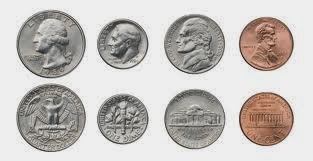
I was recently talking to a friend about how I no longer bend down to pick up a penny on the sidewalk, because it takes so many of them to buy anything worthwhile.  Back when I was a very young man (during the mid to late 50’s) I remember buying penny candy and five cent soda.  Today in my State of residence it takes almost ten of them just to pay the sales tax on a dollar’s purchase.  A 20 ounce soda sells for $1.89 plus sales tax of about seventeen cents.  I can say to the government like they use to say on the Virginia Slims cigarette commercials, “you’ve come a long way baby!”  Back when soda was five cents they didn’t even have Sales Tax, and with today’s Sales Tax I could buy 3 sodas at old time prices and two pieces of penny Bubble Gum.
 
I keep a special decorative jar in the master bedroom where I empty all my change (coins) at the end of a day.  They are a hassle to carry around, plus they wear your packets prematurely, and no, I am not going to carry around a coin purse.  That’s what my grandfather use to carry, but there again coins were worth something back then.
 
Up until about 5 years ago, I used to tell cashiers to keep the change when we were talking about a dime or less in change. Then I realized that if I was short a dime or less at point of sale I would be made to return the item for lack of money.  The coins I save find their way into parking meters or the like.
 
Another rule change in my life: I feel that I’ve reached a point in my life where the odds of me winning the Lotto have improved.  All you have to do is look at the Lotto history of winners.  Nine out of ten winners are around my age and retired.  I do, however, only play the very big jackpots.  I wouldn’t want to win a million dollars and know that I will never win another jackpot because the odds of that happening are not favorable.  I know that one of these days I will post that I have won the lottery and will be retiring from the blog because the island I am buying doesn’t have internet service.
 
Here is some more information to back me up on my rule on the use of coins:
·       WASHINGTON (Reuters) - In a budget proposal that aims to make government more efficient, President Barack Obama on Tuesday floated the idea of using alternative metals to make penny and nickel coins.
·       The fiscal 2015 budget, released on Tuesday, points out that the coins' manufacturing and circulation have not changed in decades and that the Treasury Department has been reviewing the coins' production. Obama has proposed similar reviews in the past but the measures stalled despite not being partisan points of contention.
·       Obama's 2014 budget had pegged the cost of manufacturing a penny at two cents and the price of a nickel at 11 cents. ~ (This version of the story was corrected to make clear that Treasury is not considering phasing out penny or nickel coins, is looking instead at using alternative metals) (Additional reporting by Patrick Temple-West and Emily Stephenson; Editing by Bill Trott)
 
The best is yet to come…..

Tuesday, February 25, 2014

The Bottom Line

The Bottom Line
Have you ever felt like OSHA will have to require that handles be installed if more people are to climb on your back?

·      OSHA's Mission:                                                                                                                          With the Occupational Safety and Health Act of 1970, Congress created the Occupational Safety and Health Administration (OSHA)* to assure safe and healthful working conditions for working men and women by setting and enforcing standards.

Every time we turn around some large corporation, government agency or small business, is trying to somehow get more money out your pocket or bank account.  Most people don’t realize the amount of taxes per gallon of gasoline they pay in their respective States.  In the State of Washington the tax on a gallon of gasoline is just under 50 cents per gallon.  Do you realize that for every 30 gallons of gasoline you buy you are paying $15 dollars out of pocket before you even get a drop of gasoline in your tank?
 Washington: Cents per gallon 37.5 other taxes .096 includes HASMAT fee and Oil Spill Admin Fee
Today I was hungry and decided to stop at a place where I’ve stopped a few times in recent years and was surprised that they wanted an extra 40 cents for using a credit card.  The total was under $4 dollars so the surcharge amounted to more than 10%.  I mentioned to the cashier that it was a bad move on the owner’s part because he would lose business.  Her answer was it’s not his idea it’s the banks.  I explained that I am also a businessman that the cost is more like 1.5% per transaction.  I don’t know about the rest of his customers but I for one don’t plan to go back even if I have cash in my pocket.
What the owner should have done is add 5 or even 10% to all his menu items, and not mess with the transaction.  I doubt that anyone would notice the increase on such small prices. I don’t feel that I am being petty, because I probably do 10 to 20 transactions per day, and if everyone decides to add 40 cents per transaction that adds up to 8 dollars a day.  I enjoy dealing through my church for charity’s sake, but then again every time I go to pay for anything at a cashier stand everyone wants a dollar for one charity or another.

The following information shouldn’t surprise anyone, but then again it might:  How Much Does the Average Person Pay in Taxes?
  • Answer: The amount the average person pays in taxes is between 40% and 54.4% of income. The variance is due to where they live and income levels. Each state and even municipalities have their own sales taxes and various usage taxes which must be figured into the total. On top of the self-employed people pay the entire amount of Social Security as opposed to employees whose employers pay half. The overall tax picture requires that people consider the fuel taxes and other taxes when determining their average tax amount.  ~ Reference: www.cato.org
Imagine the disappointment of realizing that whatever wage you earn you only keep around 50% or less.  All of a sudden 40 cents per transaction, and a dollar for charity every time you go through a cash register adds up.  I don’t start my day by wanting to be a cheapskate, but aren’t taxes supposed to go in part to help the less fortunate?  The best is yet to come…..

Monday, February 17, 2014

Getting Pushed Around

Getting Pushed Around
The ultimate slap in the face by a corporate giant.  “I am mad as hell, and I am not going to take it anymore!”  That is a quote from the Movie “Network” (1976),
I realize that everyone is always attempting to improve on a good thing.  However, the old saying about “don’t fix it if it ain’t broke,” comes to mind, Present day corporations have been known for some time to be not just greedy but beyond stupid greedy.  First off all I am part of a group of people within the boomer generation, secondly bordering on being passive.
There are many things worth fighting for, but we need to take a stand somewhere and begin to push back.  Here is my dilemma:  The Tonight Show with Jay Leno has been in the First Place ranking amongst late night entertainment since Jay Leno has been the host and since before that with Johnny Carson.  The reason for the success can be directly attributed to the fact that Leno grew old alongside of my generation.  Beyond that he understands our sense of humor and our lifestyles.  All of sudden some braniac (not) at the top of NBC has decided to protect their future investment by bringing in a younger host, that a younger audience can identify with, and protect their future ratings and investment.  All this reasoning as if they will keep the audience they have and add their new found younger audience to the numbers.
It might not be a half bad plan if it had been negotiated properly, and at least gave the appearance that somehow they were working in our (the present audience) best interest.  Many viewers such as myself showed our displeasure, and yet, we were totally ignored due to the lure of future ratings and dollar signs.  Because I believe in Karma, I don’t have ill will for them in their future endeavor, and by no means am I calling for a boycott of the new show or their sponsors, but I can personally not tune into their show, and also not buy the products that sponsor the new Tonight Show.
I grew up from a very young age knowing certain truisms like: A bird in the hand is worth two in the bush, if it ain’t broke don’t fix it, don’t bite the hand that feeds you, and finally if you don’t stand for something you will fall for anything.
This isn’t the ultimate or only, possible solution, but one I might have implemented:  Renew Leno’s contract for two more years, have Leno working 3 day workweek with Fallon filling in the other two day for two years, while similarly training and sharing the workweek with Fallon and a possible replacement on Fallon’s show following the Tonight Show.  In this way it would allow us the audience to get used to Fallon and maybe show that we liked him or didn’t.  At the same time they would be training Fallon’s replacement.
When NBC acted like a bully sending Leno to pasture while being very productive and a cash cow to the corporate higher ups, they caused me to be unhappy and turn off the Tonight Show, and worst yet I won’t even catch the 11 pm news on their network, I will now go to their competition.  If you feel as I do, I hope you will follow my peaceful demonstration, and feel a tinge of satisfaction as you repeat the following mantra:  “I am mad as hell and I am not going to take it anymore!”  My best wishes for a very successful retirement go with Jay Leno.  I happen to know that he is very wealthy, and to a very large degree very happy (with his wife and car collection).  At this point in my life I can’t even aspire to those heights of success, but you never know, stranger things have happened.  I just feel that we all should have enough control to decide when we want to walk away especially if we are discharging out duties in a very successful way.  On a personal note, I retired early, and I am very happy and healthy because of it.  When I first retired, my friends and co-workers told me that I was a pretty smart man.  Since then, I have run into some of those friends and co-workers who no call me a genius.  The best is yet to come…..

Saturday, February 15, 2014

Fool’s Economics

Fool’s Economics
During the 1950’s and early 1960’s there was a sense of stability like we haven’t seen before or since.  During the above mentioned period you could work on your personal budget and be off by a very few dollars year after year.  You knew a year or two in advance what a gallon of milk was going to cost or the price of a gallon of gasoline within a couple of cents month to month.  You could also plan on your house rent and car payments staying stable. 
Granted your wages also didn’t fluctuate much but there also were no imminent lay-offs.  For extra income there were plenty of side jobs, or overtime with your own employer.  There were also opportunities like Avon sales, Kirby Vacuum cleaner sales, Encyclopedia sales.  Of course there were also ample opportunities to start your own business if you wanted to (examples: landscaping, painting houses, and etc.).
 
The fool’s part of the economics, comes and has been around for way too long, when consumers are looking for savings anywhere they can get them at any cost (did you catch the irony).  A very popular saying comes to mind: “If it’s too good to be true, it most likely is.”
 
I am way too sensible and common sensed to be lured by obvious tactics.  Any time you get a special coupon from a newspaper or magazine offering, “40% off today only!”  My response is, if you don’t have that product or service in your must buy now list don’t.  Stay home and instead of saving 40%, save 100%.  If one product is being offered at regular price with a 40% rebate, and a competitor is selling it for slightly cheaper with no rebate, I say skip the rebate and save a couple of dollars on the spot.  The reason rebates are not redeemed are:
  • Sixty percent of study participants who failed to redeem their rebates said procrastination or forgetting was to blame, compared with 20 percent who said the redemption process was too much effort, and 20 percent who lost their receipts, mistakenly threw out the required packaging or faced some other constraint.
  • Rebates are a popular marketing strategy of manufacturers because they boost sales yet result in little payout, since few buyers bother to redeem them. They are most frequently used as a tactic to promote consumer electronics, where redemption rates, even on larger-ticket purchases such as computers and televisions, are well below 50 percent. ~University of Florida News
 
During many years of marketing competition, manufacturers offered towels, glasses, cups, saucers within their boxed products (example: laundry detergent).  Cereal manufacturers offered popular music releases in 45 rpm records in their boxes to get the kids to ask for a particular brand as opposed to another.
It seems that everyone offered Green Stamps at one time or another.  Cigarette manufacturers offered their own coupons that could be redeemed for anything and everything in their catalogs.  I remember my step-father’s friends used to poke fun at him, asking if he was saving enough coupons to get an Iron Lung.  The silliest part of all is that in most instances, if you spend $800 dollars on product you will have enough stamps to receive a prize valued at $1.50.  The fallacy is that if you stop smoking you could spend thousands of dollars buying all the prizes you want (no coupons required).
Not much different than spending (wasting) $300 dollars in a Casino to come out a $50 dollar winner at the end of the Casino visit (if a winner at all).  In the case of the saucer in the box of detergent; you could spend your money on the cheaper detergent with no gift inside and then buy a saucer for thirty cents (at 1960’s prices).  To make it event worst, they would hook you until you acquired the whole set of plates.  I will need to follow-up this post with more comparisons.  Up next:  Have you ever benefitted from any service or product that the government has Regulated or De-Regulated?  I know the answer, do you?  The best is yet to come….

Tuesday, February 11, 2014

Frugal Is In

Frugal Is In

No one in my life was a better example of frugality than my grandparents and then to a lesser extent my parents.  Frugality doesn’t just appear one day, in fact it is an acquired talent.
The best reason for the frugality being in my grandparent’s life is that they experienced in their life time two world conflicts that totally changed the world as they knew it.  They survived a Depression, and the two world conflicts, they experienced the changing work force from the husband being the provider to the women having to hold the home front while the men were away fighting wars.

Rationing was all around, it became a necessity to grow your own garden for the sake of savings and availability.  While front yards continue to be a sources of pride and what we now call curve appeal, the backyard became something else altogether.  Instead of the normal happy family hangout for entertaining, the backyard became a mini farm. A totally different family entertainment atmosphere, more of a food source value.  Most everyone got into gardening, and raising chickens in their backyards.  Oh that’s right, I forgot to mention that was in a time when government didn’t have so many restrictions that prevented you from raising chickens through land use regulations.
 
I still remember my grandmother darning sock by using a light bulb to shape the sock while making them good as new with needle and thread.  I’ll bet most homes had needle and thread plus a thimble as part of an everyday kit.  Today I am a culprit of throwing socks away when one of the pair of socks begins to show a little wear.  I also remember my mother using iron on patches on worn blue jeans (Levi’s) on the inside of the garment.  Today our silly youth actually wear-out their pants on purpose to look in style or spend hundreds of dollars to buy pre-worn-out jeans.
Sometimes my grandmother would crumble a handful of saltine cracker and add them to scramble eggs to make the meal stretch, even when there were plenty of eggs. Simply because that is the definition of frugality and out of habit.  If you were to get a treat for a drink you would get a pitcher full of Kool-Aid for .05 cents instead of a soda pop each.  By the way the Kool-Aid never had enough sugar for my taste (Bingo-frugality).
 
The family had a car but we didn’t drive the car around town; we drove to town and parked at the grocery store parking lot, and we walked everywhere from there.  Sometimes the family would go in different direction (example: the men would go to the barbershop, the ladies would go to the drug store, and other shopping).  We always had a pre-arranged time to meet back at the car.  The treat was a stop at the A&W Root Beer for a grilled ham sandwich with French fries and a frosted mug of root beer.  I don’t remember ordering a hamburger back in those days.
We are just coming out of two wars that have lasted about 10 years, not to mention high rate of unemployment.  I think it’s time that frugality came back in style.  You don’t have to wait for it to start trending, we are in charge of our family units, and we need to start yesterday.  The sooner we start the better.  The best is yet to come…..

Tuesday, January 21, 2014

1950’s USA Economics

1956 Ford Custom V-8 4-door
From my youthful recollection the whole time of the 1950’s seemed like a laid back time almost sleepy in all aspects of life.  In reality the 1950’s was a vibrant progressive time that I couldn’t guage, because after all I had not witnessed the 1930’s and 1940’s. 
The 1930’s were a time of struggle and sacrifice.  A time when you worked extra hard just to reach a level of survival.  We are talking about the 10 years that followed the Great Depression.  Everyone used every penny they could bring together just to have a meager meal of bread and water.  Soup was a luxury for most of the country.  If you happen to have a large family you were in for a real struggle.  Those were times when parents many time would go to sleep hungry just so their children would have something in their stomachs.
The 1940’s were not much better than the 1930’s until the war started and most able bodied men signed up to defend the country.  Women took the placed of men in the factories to supply the war machine, and the economics didn’t improve much because sacrifices needed to be made because of the war effort. 
The 1950’s were in fact a Decade of Prosperity.  Young people like myself were aware that all our needs were being met, and didn’t question how.  By 1956 my family bought the first brand new car a 1956 Ford Custom V-8 4-door.  Our car payment was $24 per month.  By 1957 we bought our first brand new 3 bedroom house.  I don’t remember the cost of the house but the mortgage payment was $58 per month all inclusive (Interest, insurance and tax if there was one).  1957 was also the year we bought our first black and white Philco Television.
 
  • To put this in perspective, 1957 is considered to be the height of the baby boomer generation.  Dwight D. Eisenhower was the United States President and Richard Nixon was the Vice President.  There were around 170 million people living in this country (compared to 300 million today).  The 1957 Best Picture of the Year (The Bridge on the River Kwai) grossed $27,200.  In 2007 the movie “The Departed” grossed $125 million.  No one owned a computer fifty years ago.  The only games were “board games” and make believe games.  Girls still wore dresses and guys still dressed up to take a girl on a date.  Mothers stayed at home to raise the kids and fathers were happy to be the breadwinner of the family.
  • A lot has changed in fifty short years.  The United States of America bears little resemblance to the country bearing its name not even two generations ago.  States that were mainly deserted deserts fifty years ago are now the fastest growing states in the country (Arizona, Nevada and Utah).  Areas that were farms fifty years ago are now cities with hundreds of thousands of people.  There was only one Interstate Highway fifty years ago and that was I-70.  Now people can travel all over the country on multi-lane super highways going pretty much as fast as they want. 
  • In 1957, the average income of America’s 44 million families (according to the United States Commerce Department) was $5,000.  There were actually 4 million families whose income was over $10,000.  There were also 6.5 million families whose annual income was under $2,000.  The vast majority of American families, 33 ½ million of them, had annual income between $2,000 and $10,000. ~Shmoop University, Inc.
In the 1950’s and even 1960’s most of us didn’t have fitness center memberships and if we did it, it was the YMCA.  Most of us drank water from the tap (faucet) for free, not bottled for a fee.  Most of our exercise came from walking almost everywhere, or doing chores round the farm or around the house.  We performed many of the physical jobs that are now performed by robotics also for exercise. My family treated the children to a hamburger or a ham sandwich twice a month, today a majority of children and adults eat fast food as much as twice a day. Hang in there, the best is yet to come…..

Friday, January 3, 2014

Comfort Zone

Comfort Zone
People close to me know that I don’t like change for change sake.  I don’t even like necessary change.  I don’t mind change initiated by me, but I have to think long and hard about that.
The comfort of familiarity comes at a cost that we are often not even aware of.  Who in their right mind would think that there is a price to be paid for enjoying the comfort or comforts that you so willingly embrace.  After all costs are most often associated with change, rather than stability, right?
I most often have the latest in computers, cell telephones, iPads, and any other technological advances.  Truth be known those changes are brought about by the desire to have the advantage in the ever changing world of communications and technology.  If the world of technology were to once again become stable (stale-slow) as in the 70’s and 80’s I would be in hog heaven.  The years when the IBM Selectric II typewriter, and Motorola Beeper were the technological wonders of the world for long stretches of time.  You didn’t have to update equipment every six months to keep up with the Joneses.
By surrounding ourselves with familiarity, we are most often creating a protective shield that keeps outsiders out of our circle.  Outsiders are a source of information that keeps us growing as individuals, in a competitive environment.  Our subconscious tendencies are to seek out people that think like us because they reinforce our attitudes, and way of doing things.  Please understand that this is not necessarily a bad thing, as long as we are aware of what we are doing (accomplishing).
 
One can actually compare the above information to someone who is successful but enjoys being surrounded by “yes men.”  Even when these individuals are making bad decisions they are constantly being praised and validated by the “yes men” they surround themselves with.  This environment when sustained for long periods of time can lead to self-destruction of the successful individual(s).  You may not agree with me and that is totally fine, after all my disclaimer as usual is that, this is one humble man’s opinion.
Two famous examples of self-destruction that come to mind: Elvis Presley, and Michael Jackson.  Their entourage (handlers, hangers-on) catered to their every whim, and eventually all their fame, money and popularity couldn’t save them from self-destruction.
There are two popular sayings (practices) that come to mind, that exemplify the subject of this post: “think outside the box,” and encouraging the view of “an outsider looking in.”  If you are comfortable with doing things the same way year in and year out, you are missing out on the most important element to what you are doing and that is the opportunity to: advance; evolve; grow, and thus stay competitive.
Truth be told I still don’t like change but I embrace it cautiously because it is a necessity to stay relevant.  The best is yet to come….